Views: 0 Author: Site Editor Publish Time: 2026-11-12 Origin: Site


Modern interior design prioritizes spatial efficiency and adaptive ergonomics. You likely notice how tight living spaces demand smarter, harder-working pieces. A high-quality furniture lift mechanism serves as the bridge between static furniture and dynamic living. It enables structural transformation to meet contemporary demands for multifunctionality. Without these hidden hardware elements, spaces remain rigid and cluttered. This guide evaluates the primary applications of these mechanisms across various environments. We will explore how different lifting systems operate and where they make the biggest impact. You will learn the technical criteria for evaluating load and stroke capacities. Finally, we provide a clear framework for selecting the right solution for your specific design requirements. By understanding these mechanical foundations, you can elevate ordinary furniture into highly adaptable, user-centric tools.
Utility & Space Optimization: Lift mechanisms are essential for transforming small-footprint areas into multi-use zones.
Technical Criteria: Success hinges on balancing weight-bearing capacity (load), smooth travel (stroke), and long-term mechanical reliability.
Diverse Applications: From residential sofa beds and adjustable armrests to industrial-grade material handling, these mechanisms offer varied functional profiles.
Decision Framework: Effective selection requires evaluating material compatibility, safety locking features, and intended frequency of use.
Designers often confuse standard hinges with advanced lift systems. A standard hinge only rotates. It simply swings a door open or closed. It cannot support heavy, dynamic loads. A functional furniture mechanism does much more. It lifts, holds, and guides heavy panels along specific geometric paths. These systems typically incorporate gas struts or heavy-duty mechanical springs. They manage the weight of the furniture component, making heavy solid wood panels feel weightless to the user. This mechanical assistance defines the difference between basic hardware and advanced functional systems.
Furniture used to be entirely static. You adapted your body to fit the chair or the desk. Today, adjustable components shift furniture from passive objects to active, user-centric tools. Desks rise to standing height at the push of a button. Headrests tilt to support your neck while reading. This ergonomic evolution relies entirely on robust lift mechanisms. They allow users to customize their physical environment instantly. This active engagement improves daily comfort and reduces long-term physical strain.
Urban living presents a constant "limited square footage" challenge. Designers must utilize vertical space and hidden storage to make small rooms functional. Lift mechanisms solve this problem beautifully. They reveal hidden compartments under beds. They elevate coffee table tops into dining surfaces. By integrating these mechanisms, a single room can serve as a lounge, a dining area, and a home office. The hardware remains invisible, but the functional versatility transforms the entire living experience.
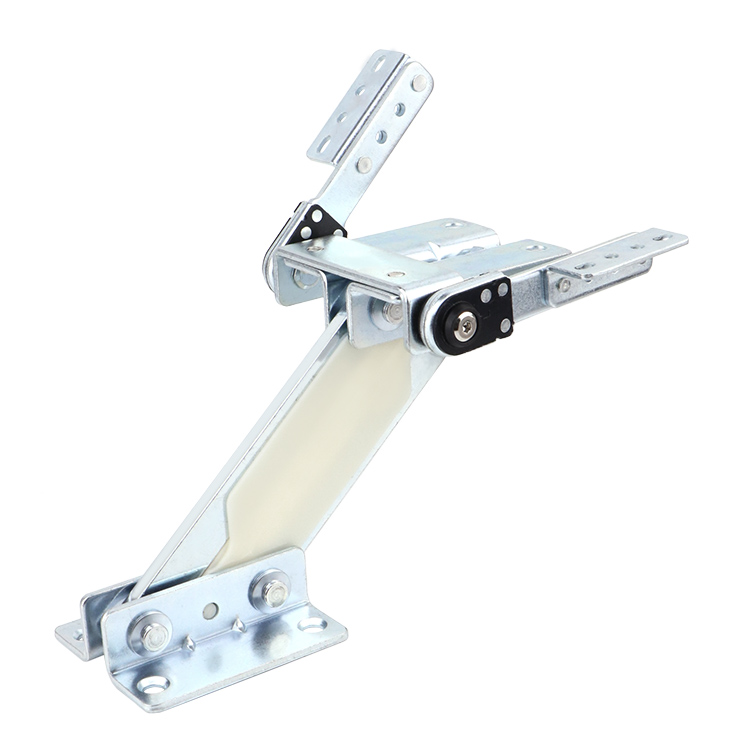
Living rooms demand high adaptability. Sofas must do more than provide seating. They often serve as primary guest beds. You need a reliable multifunctional sofa hinge to handle this transition smoothly. It allows effortless convertibility between upright seating and flat sleeping configurations. The mechanism must lock securely in both positions. Similarly, a robust sofa bed hinge ensures the frame remains stable under shifting body weight. These components endure immense stress, making their quality critical to the furniture's lifespan.
People sit differently when reading versus watching television. The adjustable sofa armrest hinge plays a huge role in accommodating these shifts. It improves posture by offering personalized relaxation angles. Users can click the armrest into their preferred position using a ratcheting gear system. This small mechanical addition drastically enhances the perceived luxury and comfort of the seating arrangement.
Ottomans, bed frames, and corner cabinetry hide massive storage potential. Lift systems make accessing this space effortless. A gas strut assists the user, so they do not lift the full weight of a heavy mattress. In kitchens, corner cabinet lifts bring heavy mixers up to counter height. These mechanisms maximize hidden storage accessibility. They turn dead space into highly usable, ergonomic storage zones.
Lift mechanisms extend far beyond residential living rooms. Professional environments rely heavily on them. Height-adjustable workstations use synchronized lifting columns to maintain level surfaces. Heavy-duty material handling carts use scissor lift mechanisms to position parts ergonomically for factory workers. These industrial applications require mechanisms that tolerate constant adjustment and massive weight thresholds.
You must understand load-bearing dynamics before selecting hardware. Weight distribution directly impacts pivot point integrity. If a wooden lid weighs 50 pounds, the pivot point takes immense stress during the initial lift phase. You must calculate the torque. The further the weight sits from the pivot, the higher the force required to lift it. Selecting a mechanism rated for the exact weight ensures smooth operation. An underpowered gas strut will fail to hold the lid open. An overpowered strut will make the lid impossible to close.
The length of the lift stroke determines the mechanical fit for your specific furniture design. Stroke refers to the travel distance of the mechanism. A short stroke might not open a cabinet door fully, restricting access. A long stroke might over-extend and break the wooden frame. Geometry also matters. The mechanism must clear internal shelves and external walls as it moves through its arc. You must map this geometric path during the drafting phase.
Assess the interface between the mechanism and the frame materials. Solid wood holds coarse screws exceptionally well. Particleboard or MDF will strip out under dynamic loads. If you mount a heavy lift mechanism to MDF, you must use threaded inserts or through-bolts. Thin metal tubing requires reinforced welded brackets. Assessing this structural interface prevents the hardware from tearing out of the furniture over time.
Safety remains non-negotiable. You must evaluate built-in locking mechanisms. If a lifted bed frame collapses, it can cause severe injury. Pinch-point protection is crucial for consumer-facing furniture. Soft-close dampers prevent slammed fingers. Industry bodies like BIFMA set standard safety guidelines for commercial furniture. Adhering to these standards protects users and shields manufacturers from liability.
Mechanism Type | Typical Load Range | Primary Use Case | Key Safety Feature |
|---|---|---|---|
Gas Strut Lift | 20 lbs - 150 lbs | Storage Beds, Overhead Cabinets | Controlled descent damping |
Ratchet Hinge | 10 lbs - 50 lbs | Adjustable Armrests, Headrests | Multi-position positive locking |
Scissor Lift | 100 lbs - 500+ lbs | Industrial Tables, Pop-up Desks | Anti-collapse safety pins |
Spring-Assisted Pivot | 50 lbs - 200 lbs | Sofa Beds, Wall Beds | Tension adjustment bolts |
Many manufacturers fall into the durability gap by choosing cheap hardware. Low-grade steel suffers fatigue failure quickly. Repeated bending and lifting weaken the metal structure. The pivot rivets loosen, causing the mechanism to wobble. You should specify hardened steel for all moving parts. Investing in high-cycle hardware prevents costly warranty claims and protects your brand reputation.
Minor misalignments in mounting points lead to disaster. If hinges sit just two millimeters out of square, they bind. This mechanical binding causes premature wear. It forces the user to push harder, which bends the frame. Factories must use precision CNC routing and dedicated installation jigs. These tools ensure perfect alignment every single time, guaranteeing smooth operation.
Furniture lasts for years, but mechanisms need occasional care. You must plan for accessibility. Users should easily reach pivot points for potential lubrication. Tension adjustment bolts must remain accessible without dismantling the entire sofa. Dust and pet hair can ruin exposed greased tracks. Designing protective shrouds around the mechanism extends its lifespan and reduces maintenance headaches.
Never assume a mechanism works perfectly based on a digital model. You must simulate frequent usage cycles. Does it squeak? Is the lifting force intuitive? UX testing reveals operational flaws before mass production. A mechanism might technically lift the weight, but if it requires awkward body positioning, users will hate it.
Assemble a full-scale, production-ready prototype.
Cycle the mechanism 10,000 times using an automated pneumatic rig.
Measure the exact opening and closing force required at various angles.
Inspect all pivot points and rivets for early signs of metal fatigue.
Gather qualitative feedback from diverse users regarding ease of use.
Start by determining the frequency of use. A hotel sofa bed sees daily, aggressive use. A residential guest bed sees occasional, gentle use. This frequency dictates the necessary build quality. You do not need a 50,000-cycle industrial mechanism for a residential storage ottoman. Define these parameters early to avoid over-engineering or under-specifying your hardware.
Ensure the hardware specification matches the furniture's structural material. A heavy-duty lift requires a heavy-duty frame. If you upgrade the mechanism, you must upgrade the mounting points. Create a strict compatibility checklist for your engineering team. This prevents the common mistake of pairing premium lifting hardware with weak particleboard frames.
Evaluate suppliers rigorously. Do not buy based on price alone. Ask for comprehensive technical documentation. Request independent load testing reports. Ensure long-term parts availability so you can service warranty claims years down the line. A reliable supplier acts as an engineering partner, not just a parts vendor.
Verified load test certificates from independent laboratories.
Clear, documented warranty terms specifically covering moving parts.
Responsive technical support teams available for design consultation.
Consistent manufacturing tolerances across multiple production batches.
Testing with an early-stage mockup is critical before full-scale production rollout. Full-scale production magnifies tiny errors. A prototype allows you to verify the geometric path of the lift. It lets you feel the tension of the springs. Prototyping saves time, material, and ultimately, your reputation. Never skip this validation step.
Selecting the appropriate furniture lift mechanism is not merely an engineering task. It is a fundamental design decision that dictates the long-term utility and perceived value of a furniture piece. The right hardware transforms a static box into a dynamic, ergonomic tool. By focusing on specific load requirements, you prevent catastrophic frame failures. By demanding mounting precision, you ensure decades of smooth operation. Aligning your hardware choice with strict evaluative standards ensures that your furniture remains a reliable centerpiece in any space. Start by auditing your current designs for ergonomic gaps. Request physical samples from reputable hardware vendors. Finally, build rigorous test rigs to validate all load claims before bringing your next transformable piece to market.
A: The load capacity is the primary constraint. It is followed closely by the required stroke length. Balancing these two ensures the furniture performs its intended function smoothly, without placing undue mechanical stress on the frame or the user.
A: A standard hinge facilitates basic rotation on a single axis. A lift mechanism typically includes spring-assisted or gas-strut support, safety locks, and specific geometric paths. These features allow it to move heavy objects safely into entirely new configurations.
A: While possible, it is highly complex. Retrofitting requires significant structural reinforcement of the existing frame. The original wood panels usually cannot handle the new mounting points and the concentrated stresses applied by the lift movement.
A: Periodically check for fastener tightness. Screws can back out over time. Apply manufacturer-recommended dry lubricant to pivot points annually. This maintains smooth operation, prevents metal-on-metal wear, and eliminates frustrating squeaks and noises.
A: Yes. Industrial-grade mechanisms are designed for heavy duty cycles and much higher weight thresholds. Residential components prioritize silent operation, aesthetic integration, hidden profiles, and ease of use for the average consumer.

| | Address: A1 No.277 HeFu Road,Fuwan Industry Area,Gaoming District,Foshan City,Guangdong,P.R.China |
| | 86-13928225189 |
| | Working Time: Mon–Sat: 08:30–18:00 |
| | E-mail: Lisa@fswinstar.com |


