Views: 0 Author: Site Editor Publish Time: 2026-09-29 Origin: Site


The transition of furniture from static objects to dynamic, multi-use pieces relies entirely on hidden hardware. A poor-quality hinge quickly leads to user frustration, warranty claims, and significant brand damage. Manufacturers and designers must understand the internal mechanics of these systems to build truly resilient products. Balancing a seamless user experience against long-term structural integrity remains non-negotiable in today's competitive market. Consumers expect smooth, silent operation every single time they adjust their furniture.
Before evaluating hardware suppliers, you must grasp the mechanical principles driving these movements. Understanding potential failure points and industry grading standards for a modern multifunctional sofa hinge ensures your end product survives daily use over years of service. Designers often focus on aesthetics, but the internal hardware dictates the true lifespan of any piece. This guide breaks down the core physics, structural roles, and critical evaluation metrics needed to engineer superior functional furniture from the ground up.
Mechanical Core: A functional furniture mechanism relies on precision-engineered ratchets, pneumatic struts, and high-tension springs to manage weight distribution and enable smooth transitions.
Application Specificity: Different zones require distinct hardware—from heavy-load sofa bed hinges to precision-click adjustable sofa armrest hinges.
Evaluation Metrics: True hardware quality is measured objectively by steel gauge thickness, cycle-test certifications (e.g., 10,000+ cycles), and static load-bearing capacities.
Risk Mitigation: The most common point of failure is not the hinge itself, but improper frame alignment during manufacturing, highlighting the need for hardware with built-in tolerance allowances.
Transforming heavy upholstered frames requires highly calculated physics. When you pull a sleeper unit outward or tilt a backrest, you manipulate significant physical mass. The internal hardware operates as a sophisticated fulcrum. It redirects the physical force exerted by the user to safely lift, fold, or extend these heavy sections. Effective leverage allows a 50-kilogram backrest to move smoothly under the guidance of just a few kilograms of human effort.
This force redirection prevents sudden drops and ensures structural stability. A well-engineered functional furniture mechanism relies on counterbalance physics rather than simple brute force. Engineers calculate the exact center of gravity for the moving frame section. They then match this against the tension rating of the hardware to neutralize the dead weight.
We can break down the internal components handling this stress into three distinct categories:
Ratchet Gears: These components provide multi-angle locking positions. Most standard designs utilize 3 to 6 gear stages. Precision machining here prevents the gear teeth from slipping under sudden impacts.
Tension Springs: Springs actively counterbalance the weight of the furniture piece. They store kinetic energy when stretched and release it during the lift phase. This energy transfer makes lifting feel remarkably light and highly controlled.
Pneumatic/Gas Struts: These sealed cylinders offer damped, controlled motion. They regulate the speed of the moving frame to prevent sudden slamming, ensuring maximum user safety during operation.
Avoid assuming any hinge operates "effortlessly" without analyzing the counterbalance physics. Real performance stems from matching spring tension accurately to the upholstery weight.
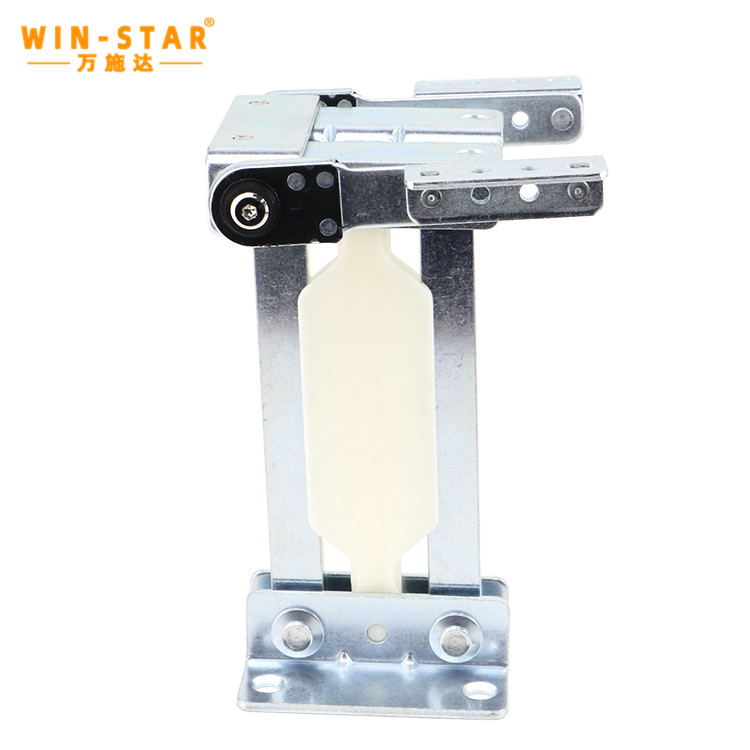
Furniture engineering requires applying specific hardware to specific structural zones. A one-size-fits-all approach inevitably causes mechanical failure. Different sections of a sofa endure vastly different types of load stress. You must select hardware designed explicitly for the intended movement arc and weight capacity.
Creating a stable sleeping surface demands robust engineering. A standard sofa bed hinge typically utilizes a dual-action pivot and a heavy-duty locking gear. This design allows the backrest to fold completely flat or enables a hidden sub-frame to lift and extend outward smoothly.
When evaluating these mechanisms, focus on their dynamic impact resistance. They must support dynamic, full-body weight impact as users sit or drop onto the extended bed. Always look for hardware featuring heavy-duty steel rivets and reinforced pivot points. Weak rivets shear off rapidly under repeated lateral stress, destroying the entire assembly.
Armrests and headrests require finesse rather than raw lifting power. An adjustable sofa armrest hinge generally uses micro-ratchet systems. These smaller gears allow for fine-tuned ergonomic angle adjustments, giving users precise control over their seating posture.
Evaluation here focuses heavily on machining precision. These components require incredibly tight tolerances to prevent mechanical "wobble" over time. Furthermore, noise-reduction casing proves absolutely critical. Because this hardware operates just inches from the user's ears, any metallic clicking or grinding ruins the perception of quality.
Many modern sofas incorporate hidden storage beneath the seat cushions. Lifting these heavy seat decks requires spring-loaded or gas-assisted mechanisms. These tools assist the user in raising the lid while holding it securely open.
Safety remains the primary evaluation focus for storage hardware. Any hinge used in this capacity must feature a reliable safety-lock or a slow-close dampener. These dampeners prevent the heavy upholstered lid from free-falling and causing severe pinch injuries.
Structural Roles and Evaluation Focus of Sofa Hardware
Mechanism Type | Core Action | Critical Evaluation Focus |
|---|---|---|
Sleeper / Bed Mechanisms | Dual-action pivot & fold | Dynamic full-body weight impact resistance; rivet strength |
Armrest / Headrest Gears | Micro-ratchet angle adjustment | Tight tolerances to prevent wobble; acoustic dampening |
Storage Lifters | Gas-assisted or spring lift | Slow-close dampeners; reliable open-position safety locks |
Not all metal hardware performs equally under stress. Recognizing objective engineering standards separates premium components from cheap alternatives. You must evaluate raw materials, surface treatments, and rigorous laboratory testing metrics.
Cold-rolled steel represents the unquestioned industry standard for internal furniture mechanics. High-quality manufacturers typically use steel gauges between 2.0mm and 3.0mm in thickness. Cold rolling compresses the steel at room temperature, aligning the grain structure to increase tensile strength by up to 20%. Cheaper hot-rolled alloys bend and deform under the cyclical stress of daily furniture use.
Next, consider surface treatment compliance. Hidden hardware remains highly susceptible to unseen rust. You must evaluate anti-corrosion treatments thoroughly. Electroplating and industrial powder coating provide necessary longevity. These protective layers prove especially critical when factories ship furniture across humid ocean freight environments, where untreated metal corrodes in weeks.
Finally, demand objective testing metrics from your hardware partners:
Cycle Lifespan: Commercial viability demands verifiable laboratory testing. A premium mechanism must pass a 10,000 to 20,000 open-and-close cycle test without showing any structural deformation or gear slippage.
Load Capacity Thresholds: Distinguish clearly between static weight and dynamic weight. Static weight defines resting mass, while dynamic weight accounts for the multiplied force of a person dropping heavily onto the sofa. Hardware selection must accommodate peak dynamic thresholds.
Even perfectly engineered hardware fails if installed incorrectly. Factory implementation introduces several severe risks. Understanding these failure points helps quality assurance teams prevent catastrophic product breakdowns.
Alignment tolerances pose the biggest threat to mechanical longevity. Wooden sofa frames warp over time due to moisture changes. Frame misalignment puts tremendous asymmetrical stress directly onto the metal linkage. When one side of a mechanism bears more weight than the other, it causes premature shearing of the pivot rivets. Superior hardware designs incorporate slight lateral tolerance allowances to absorb minor frame warping.
Screwing and mounting failures also occur frequently on assembly lines. Using inadequate fasteners guarantees eventual collapse. The torque specifications and the mounting plate surface area must perfectly match the leverage force generated by the mechanism. If screws are too short or driven into low-density particleboard, the entire unit will simply rip out of the frame during operation.
Acoustic degradation represents another insidious failure point. Metal-on-metal friction develops steadily over time. If a manufacturer cuts costs by using low-grade nylon washers or applying insufficient factory lubrication, the mechanism will squeak loudly. High-quality production lines utilize industrial lithium grease and premium polymer spacing washers to maintain silent operation for a decade or more.
Sourcing reliable mechanical components requires a disciplined procurement strategy. Never base your purchasing decisions on a single golden sample provided by a sales representative. You need consistent reliability across thousands of units.
Begin by strictly enforcing prototyping and batch consistency rules. Request a small pilot batch run. Test these units independently to verify machining consistency across multiple pieces. Inconsistent stamping or varied spring tensions in a single batch indicate poor factory quality control.
Evaluate the customization capabilities of potential partners. Off-the-shelf solutions rarely fit perfectly into unique furniture designs. Assess whether the supplier can easily modify spring tension, alter mounting plate dimensions, or adjust gear angles to fit your specific proprietary frame designs.
Furthermore, analyze supply chain and warranty realities. Read the fine print regarding defect replacement policies. A reputable supplier should adhere strictly to ISO manufacturing standards and offer clear guarantees covering metallurgical failures.
Next Steps for Procurement:
Define your exact static and dynamic load requirements.
Finalize your interior wooden frame dimensions.
Request technical 2D and 3D CAD drawings from potential partners.
Compare these CAD files against your frame blueprints to identify clearance issues early.
A multifunctional sofa is only as premium as its internal mechanism. Flashy upholstery cannot hide a grinding, unstable base. The longevity of your product relies entirely on the cold-rolled steel, precision rivets, and counterbalance physics operating quietly in the background.
We highly recommend prioritizing load capacities, verifiable cycle tests, and correct frame alignment procedures. Overlooking these elements for minor initial cost savings inevitably leads to massive downstream warranty liabilities. Spend the extra capital on robust components to protect your brand reputation.
Audit your current hardware specifications today. Reach out to your procurement team and request full engineering specs, material grading certificates, and cycle-test reports from your certified hardware manufacturers. Upgrading your internal mechanisms remains the single most effective way to elevate the quality of your furniture line.
A: A premium hinge mechanism engineered for sleeper units usually supports static loads exceeding 250kg per pair. Dynamic load testing should account for sudden impacts up to 150kg to ensure rivets do not shear when users drop onto the mattress surface.
A: First, inspect the track for debris or mechanical binds. Apply industrial lithium grease to the pivot points if the mechanism feels dry. If the internal ratchet teeth are sheared or the metal frame is bent out of alignment, full replacement becomes necessary.
A: Retrofitting is generally not recommended. Static frames lack the necessary internal blocking and structural reinforcement required to mount dynamic hardware securely. Without proper frame reinforcement, the torque from the moving armrest will simply tear the mounting screws out of the wood.
A: Squeaking occurs due to metal-on-metal friction when factory lubrication dries out or cheap nylon spacing washers degrade. Prevent this by ensuring manufacturers use premium polymer washers and high-viscosity lithium grease. Post-purchase, you can carefully apply silicone spray to the pivot rivets to eliminate noise.

| | Address: A1 No.277 HeFu Road,Fuwan Industry Area,Gaoming District,Foshan City,Guangdong,P.R.China |
| | 86-13928225189 |
| | Working Time: Mon–Sat: 08:30–18:00 |
| | E-mail: Lisa@fswinstar.com |


