Views: 0 Author: Site Editor Publish Time: 2026-11-05 Origin: Site


Space-saving and ergonomic designs demand reliable internal hardware. Modern furniture requires components capable of continuous transformation. A functional furniture mechanism drives this innovation daily. It turns a static seat into a dynamic living space. The adjustable sofa armrest hinge plays a critical role here. It guarantees both user comfort and structural longevity over years of use. Weak hinges lead to sagging armrests and frustrated users. Superior hinges elevate the entire furniture experience. In this guide, you will learn how these systems operate. We will evaluate their mechanical integrity and ease of use. You will also discover integration standards for these components. Finally, you will learn how to select the best hardware for your next manufacturing project.
Mechanism Basics: Understanding the ratchet-style engagement versus friction-based locking systems.
Durability Metrics: Identifying high-cycle testing standards and material composition requirements.
Integration Strategy: Why hardware compatibility dictates the success of multifunctional sofa design.
Risk Mitigation: Avoiding common failure points like internal gear wear and spring fatigue.
Modern adjustable hinges rely on precise internal geometry. The core anatomy includes gear segments, locking pawls, and tension springs. Every component must operate in perfect unison. Internal gear segments feature precisely cut teeth. These teeth determine the available resting angles for the armrest. Locking pawls engage these teeth to hold the armrest securely. Tension springs maintain the necessary pressure between the moving parts. They also help reset the mechanism when a user folds it flat.
The "ratchet" system provides a highly tactile user experience. It enables incremental angle adjustments through step-by-step locking. Users lift the armrest and feel a satisfying click at each step. This mechanism locks firmly into place immediately after the click. To release the tension, you simply pull the armrest forward to its maximum angle. This action disengages the locking pawl. The armrest can then return to a flat, neutral position smoothly.
Engineers design different ranges of motion for specific furniture applications. Some hinges offer limited multi-positional angles suitable for reading support. Others provide full 180-degree flat-lay capabilities. Flat-lay designs transform armrests into temporary mattress extensions. The interaction between the steel frame, the mechanism, and the foam requires careful planning. The steel frame provides rigid support. The mechanism connects directly to this frame. Upholstery foam surrounds the metal components entirely. Designers must balance foam density to allow mechanical movement without exposing hard metal edges.
Best Practices for Mechanical Design: Ensure engineers specify high-carbon steel for the internal pawls. Softer metals deform under repeated stress. This deformation leads to slipping gears and unsafe armrests.
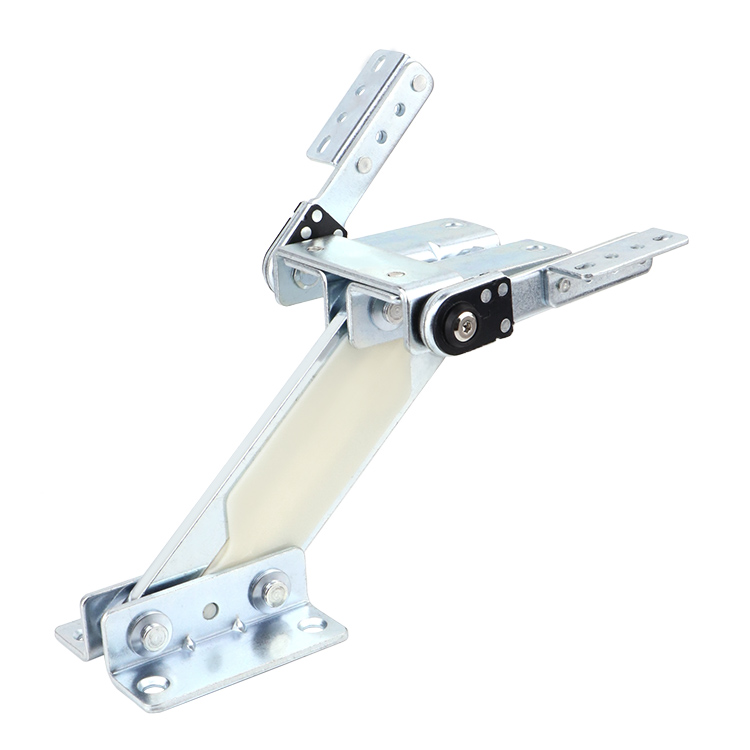
Evaluating a multifunctional sofa hinge requires strict adherence to industry testing standards. Manufacturers rely on objective data to predict product lifespans. We categorize these evaluation criteria into four primary metrics.
Lifecycle Testing: Engineers conduct high-cycle durability tests on specialized machines. A premium mechanism undergoes 10,000+ cycle testing before approval. This extensive testing ensures long-term reliability in residential homes. Mechanisms failing before 5,000 cycles often suffer from premature spring fatigue.
Weight-Bearing Capacity: Armrests frequently endure unintended heavy loads. Users often sit on armrests or use them as secondary seating. They also function as heavy headrests during lounging. Structural requirements dictate thick steel gauges to prevent bending. A robust hinge should support dynamic downward forces exceeding 50 kilograms.
Smoothness and Noise: Acoustic performance matters in modern households. Internal teeth require extreme precision engineering. Fluid movement prevents jarring stops or metal grinding. Silent operation defines a premium user experience. Poorly stamped gears create a loud, clicking sound during adjustment.
Rust and Corrosion Resistance: Metal parts face diverse climate challenges globally. High humidity environments cause untreated steel to oxidize rapidly. Surface coatings prevent early degradation and mechanical seizing. Manufacturers use electrophoresis or zinc plating to seal the steel. Zinc plating offers excellent sacrificial protection against moisture penetration.
Common Mistakes in Evaluation: Many buyers ignore lifecycle testing data. They assume all heavy steel hinges perform equally. Always request independent testing certificates to verify high-cycle durability claims.
Integrating complex hardware into upholstered furniture presents unique manufacturing challenges. The gap between engineering design and factory assembly often causes product failures. Identifying these integration challenges early saves time and resources.
Upholstery clearance represents the most common hurdle. Fabric thickness causes severe interference during articulation. Designers must account for padding layers around the pivot points. If foam restricts the hinge, users cannot pull the armrest forward fully. The pawl fails to release, and the armrest becomes permanently stuck upright. Factories must implement precise foam routing templates to avoid this interference.
Mounting precision directly impacts structural integrity. Minor misalignment during assembly causes noticeable wobble. When workers install screws at slight angles, the hinge binds. This binding places excessive stress on the internal rivets. Premature mechanical failure often follows shortly after delivery. Factories should utilize pre-drilled templates and automated fastening tools to ensure alignment.
Balancing ergonomics and aesthetics challenges product designers daily. Modern sofa design demands sleek lines and low profiles. Bulky hinges disrupt this minimalist aesthetic entirely. Engineers must select hardware offering a low profile without sacrificing strength. Concealing the mechanism requires creative tailoring and strategic fabric folds.
B2B sourcing risks add another layer of complexity. Supply chain consistency matters immensely for metal hardware. Buyers must evaluate material consistency across multiple production batches. A factory might provide a perfect prototype but use cheaper steel for mass production. Regular batch testing prevents inferior materials from reaching your assembly line. Test random units upon arrival for torque resistance and visual coating defects.
Choosing the correct sofa bed hinge dictates the functionality of the final product. Manufacturers primarily choose between two distinct motion systems. Understanding their differences helps align the hardware with user expectations.
Comparison of Hinge Mechanisms
Feature | Ratchet Hinges | Friction Hinges |
|---|---|---|
Locking Method | Mechanical gear teeth and pawl engagement. | High-tension friction discs and pressure plates. |
Adjustment Style | Incremental, step-by-step specific angles. | Fluid, infinite positioning within the range. |
Noise Level | Audible clicking during adjustment. | Completely silent operation. |
Load Capacity | Exceptionally high resistance to downward force. | Moderate capacity; may slip under extreme weight. |
Best Application | Heavy armrests, backrests, and reclining support. | Lightweight headrests and luxury silent furniture. |
Integrated mechanisms differ vastly from modular mechanisms. Integrated solutions require bespoke frame construction. They blend seamlessly into the sofa but complicate repairs. Standardized modular hardware attaches externally to the wood frame. This modular approach allows for easier maintenance and replacement. If a modular hinge breaks, technicians can swap it quickly. Integrated designs often require complete factory rebuilds.
Industry standards govern international market compliance. Manufacturers exporting furniture must consider regional safety standards. Consider frameworks like BIFMA for commercial applications. These standards require strict mechanical load testing. They also mandate pinch-point elimination to protect consumer fingers. Ensuring your selected hinges meet these criteria prevents costly product recalls.
Selecting hardware requires a strategic alignment of product goals. You must analyze several factors before committing to mass production. The first step involves assessing usage frequency accurately. Is the mechanism intended for daily transformation? A primary living room sofa demands heavy-duty cycle endurance. Conversely, a guest room futon faces occasional adjustment. You can specify lighter, more economical hinges for infrequent use scenarios.
Compatibility mapping guarantees structural safety. You must ensure the hinge works with your specific frame material. Hardwood frames hold coarse-thread screws exceptionally well. They provide a solid anchor for high-torque applications. Metal tubing requires specialized mounting brackets and machine screws. Fastener pull-out strength differs drastically between these two materials. Choose hardware featuring mounting plates designed explicitly for your chosen frame type.
Requesting samples remains a non-negotiable step. Best practices dictate rigorous stress-testing of prototypes before mass production. Assemble a complete beta unit utilizing the sample hardware. Distribute this unit to test users for honest feedback. Observe how the mechanism handles daily abuse. Look for signs of fabric pinching or unusual noises. This prototyping phase highlights invisible flaws on a blueprint. It saves manufacturers from widespread post-launch quality issues.
Balance Performance and Experience: Successful furniture design merges robust mechanical engineering with intuitive, silent operation.
Align with the Lifecycle: Always select hinges featuring high-cycle durability testing to match the lifespan of the upholstery.
Prioritize Precision Assembly: Prevent mechanical binding and wobble by utilizing strict mounting templates during factory production.
Consult Technical Experts: Collaborate directly with hardware manufacturers to validate structural specifications before finalizing your frame blueprints.
A: A high-quality adjustable hinge typically lasts between 7 to 10 years under daily use. Premium models undergo 10,000+ cycle testing to ensure longevity. Lifespan heavily depends on material fatigue. Hinges forged from high-carbon steel resist wear longer than standard iron variants.
A: Yes, if the manufacturer used modular mechanisms. Modular hinges bolt onto the exterior of the internal frame. Technicians can access them through zippered panels or removable dust covers. Integrated custom mechanisms, however, often require extensive reupholstering to access and repair.
A: First, check for debris or fabric caught in the gear teeth. Clear any obstructions blocking the locking pawl. Next, inspect the tension spring for displacement or breakage. If the internal gear teeth show severe metal wear, you must replace the entire hinge unit.
A: Absolutely. Heavy, high-density foam adds continuous resistance against the tension springs. If the foam is too thick around the pivot joint, it prevents the armrest from moving fully forward. This restriction stops the ratchet mechanism from releasing properly.

| | Address: A1 No.277 HeFu Road,Fuwan Industry Area,Gaoming District,Foshan City,Guangdong,P.R.China |
| | 86-13928225189 |
| | Working Time: Mon–Sat: 08:30–18:00 |
| | E-mail: Lisa@fswinstar.com |


