Views: 0 Author: Site Editor Publish Time: 2026-11-19 Origin: Site


Modern furniture design relies heavily on dynamic components to deliver ultimate comfort. A ratchet hinge for sofa drives this vital flexibility. It enables smooth headrest adjustment. It also powers versatile click-clack mechanisms across various seating models. Many designers operate under a common misconception. They assume more gears inherently equal better quality. This assumption is simply false.
The ideal number of positions relies entirely on specific structural factors. You must evaluate ergonomic intent, upholstery thickness, and mechanical stress profiles. Choosing the wrong configuration often leads to premature failure. Customer dissatisfaction quickly follows poor hardware choices. We designed this guide to help OEMs and furniture designers make informed decisions. You will learn how to balance functionality and durability accurately. Ultimately, this framework ensures your next production run hits the perfect engineering sweet spot.
Standard gear configurations (3, 5, or 6 positions) serve distinct ergonomic needs.
Increasing gear density requires higher precision in internal locking teeth, directly impacting the hinge’s failure rate.
Compatibility with fabric thickness and padding depth is a critical constraint often overlooked during selection.
Material fatigue in the ratchet mechanism is the primary failure point, not the number of clicks.
Engineers must match mechanical output directly to human comfort. A hinge serves as the bridge between rigid wooden frames and human posture. Standard configurations offer unique ergonomic benefits. Designers must evaluate the end user's daily habits before specifying hardware.
Simplicity defines the 3-position model. Users prioritize fixed-angle supports here. This configuration provides maximum structural rigidity. Large gear teeth lock securely into place. These robust mechanisms handle aggressive usage effortlessly. Lounges in busy commercial spaces benefit heavily from this durability. Fewer moving parts mean fewer failure points. You rarely see gear stripping in these industrial-grade models.
The furniture market considers this configuration the current sweet spot. A 5-position model offers highly versatile adjustment. It provides a wide enough range for multiple resting activities. Users can sit upright for reading. They can also lean back for relaxed lounging. The gear teeth remain thick enough for reliable load-bearing. Most modern sofa headrest hinge designs utilize this exact configuration. It successfully satisfies both ergonomic variety and mechanical stability.
Premium furniture lines often demand high-fidelity adjustment. A 6-position or 8-position hinge delivers granular angle control. Users can fine-tune their resting posture precisely. However, this high density introduces severe engineering risks. It risks rapid gear fatigue. The internal locking teeth become much smaller. If manufacturers do not reinforce these teeth, they snap under applied pressure. You must specify high-grade alloys to support this mechanical density safely.
Evaluating the arc of movement requires careful calculation. Total degree range holds more importance than the raw number of clicks. A 90-degree sweep functions entirely differently than a 180-degree sweep. Imagine cramming six locking positions into a narrow 45-degree arc. The internal teeth become microscopically thin. Conversely, spreading three positions across 180 degrees creates massive, unbreakable locks. You must align the position count accurately against the available physical arc.
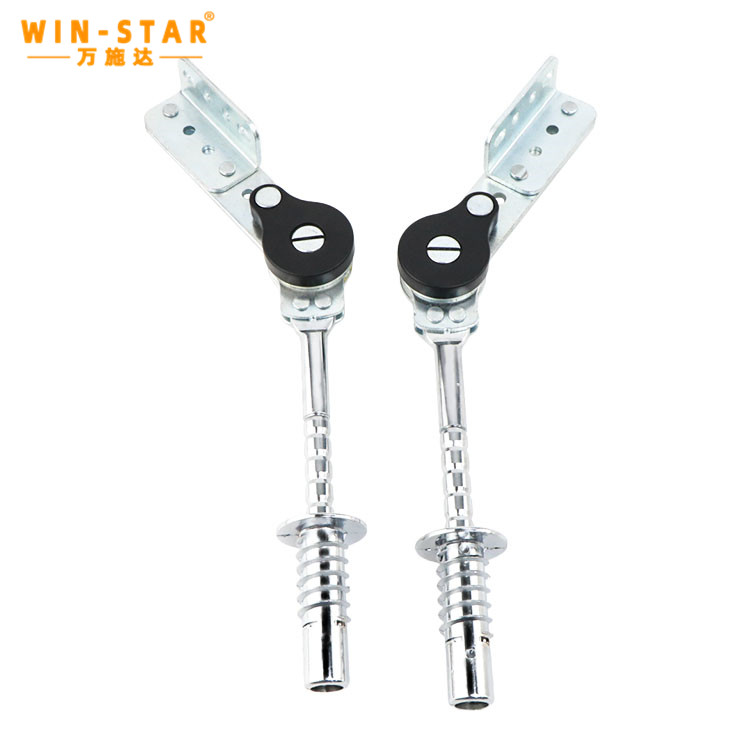
Load-bearing capacity dictates overall component lifespan. Gear density directly affects the external wall thickness of the hinge housing. A metal housing must contain the internal components safely under stress. High gear counts require intricate internal cavities. This complexity often leaves thinner external walls. Thinner metal walls warp easily under lateral stress.
Let us examine tooth engagement depth. Higher gear counts increase the risk of skipping under heavy weight. When someone leans back forcefully, the mechanism absorbs immense torque. Small teeth engage shallowly. Shallow engagement allows the locking pin to slip unexpectedly. This slipping creates a violent drop for the resting user. Deep tooth engagement prevents this dangerous scenario entirely. You must prioritize engagement depth over position variety.
Testing standards separate premium hardware from cheap alternatives. The BIFMA X5.4 standard outlines rigorous cycle testing for seating components. A testing rig simulates human movement repeatedly. We observe fascinating results during these trials. A mechanism might pass 10,000 cycles easily at 3 positions. The exact same housing might fail at 6 positions. The increased friction from finer teeth wears down the metal faster. Metal dust accumulates inside the closed housing. This debris accelerates the degradation process significantly.
Material selection remains non-negotiable. Cold-rolled steel bends under high torque applications. Fine-toothed ratchet mechanisms demand specialized heat-treated steel. Heat treatment hardens the molecular structure. It resists the shearing forces generated by heavy occupants. Incorporating a heavy-duty click clack sofa hinge requires hardened rivets and reinforced pivot points.
Material Grade |
Tooth Deformation Risk |
Average Cycle Lifespan |
|---|---|---|
Standard Carbon Steel |
High |
4,000 - 6,000 cycles |
Cold-Rolled Steel |
Medium |
8,000 - 10,000 cycles |
Heat-Treated Alloy Steel |
Low |
15,000+ cycles |
Hardware does not exist in a vacuum. It interacts constantly dynamically against fabric and foam. The clearance conflict plagues many design teams globally. Changing gear positions alters fabric tension dramatically. Foam compresses differently at every specific angle. Designers must calculate these dynamic clearance gaps accurately. High-density polyurethane foam creates strong pushback against the hinge. Poor calculations lead to ripped upholstery. They also cause unsightly fabric bunching around the headrest base.
Mounting considerations heavily influence leverage exertion. Flush-mount hardware hides entirely inside the wooden frame. It looks exceptionally clean. However, it restricts the maximum size of the hinge mechanism. Surface-mount hardware attaches directly onto the outside of the frame. It allows for larger, stronger mechanisms. Surface mounting creates distinctly different leverage forces. Engineers must calculate torque accordingly. The wood screws bear different sheer loads depending on the mounting style. Incorporating a reliable adjustable sofa hinge requires precise frame routing.
Noise control presents a unique engineering trade-off. A crisp, loud click indicates high quality to most consumers. It provides satisfying auditory feedback during adjustment. However, generating that loud click requires high structural friction. The spring must snap the locking pin aggressively against the metal housing. This continuous aggression causes faster wear. Conversely, a silent mechanism operates smoothly. It uses dampening lithium grease to reduce friction. But consumers often perceive silent mechanisms as weak or broken. Designers must balance acoustic feedback and smooth operation carefully.
Even the best mechanisms occasionally fail. Premature failure ruins brand reputation swiftly. You must understand common failure modes to prevent them. Spring tension loss stands out as a major culprit. Internal springs stretch and fatigue over time. When the spring weakens, it cannot push the locking pin deep enough. Tooth rounding also occurs frequently. Soft metal wears down into smooth bumps over thousands of adjustment cycles.
How do you identify real hardware failure? Sometimes a mechanism just needs basic lubrication. Realignment often fixes minor binding issues. If the wooden sofa frame warps slightly, the hinges bind against each other. True replacement requires distinct physical symptoms. Look for metal shavings near the primary pivot point. Listen for a dull grinding noise instead of a sharp click. These indicators signify irreversible structural damage.
Replacement logic requires careful thought. Retrofitting a higher-gear-count hinge is rarely simple. It usually requires a complete overhaul of the interior wood frame. The bolt patterns almost never match perfectly. Upgrading from 3 to 6 positions changes the pivot geometry entirely. Wood framing needs new reinforcement blocks to handle the altered stress points. You cannot simply swap the metal plates. Factory-level integration prevents these maintenance nightmares.
Production managers need a strict, repeatable selection process. We recommend establishing a standardized OEM checklist. First, analyze the absolute load requirements. A delicate headrest needs far less strength than a primary backrest. Second, determine the required adjustment angles. Third, evaluate price-per-unit constraints carefully.
Compliance and safety remain paramount globally. Localized safety standards dictate strict pinch-point protection rules. Moving gears can trap human fingers easily. Designers must shield these pinch points using structural sleeves or heavy fabric covers. You cannot sell non-compliant mechanisms in major international markets. Partnering with certified suppliers mitigates this legal risk completely. A certified headrest adjustment mechanism includes built-in safety shielding.
Scalability matters immensely for large batch runs. You must partner with reliable, verified hardware suppliers. They must guarantee consistent tooth-geometry precision. Mass production amplifies minor manufacturing defects. If one stamping die wears out, a thousand hinges will fail prematurely. Request detailed quality assurance protocols from your factory partners before signing purchase orders.
Hinge Type |
Best Application |
Key Engineering Focus |
|---|---|---|
3-Position |
Commercial Seating, Heavy-Duty Sofas |
Maximum load bearing, thick housing walls |
5-Position |
Standard Residential Furniture |
Balancing angle variety and tooth depth |
6+ Position |
Premium Ergonomic Loungers |
Heat-treated steel, high-precision stamping |
Verify the Rockwell hardness of the primary gear teeth.
Request BIFMA cycle test certificates for the exact specified model.
Inspect the riveting quality on the main pivot axis.
Test the spring tension manually across 50 random batch samples.
Ensure the mounting plate thickness exceeds 2.0 millimeters.
Furniture engineering requires precise, evidence-based decision-making. The ideal position count is purely a function of the furniture’s specific use case. It is never a universal standard. A 3-position model excels in heavy-duty commercial setups. A 5-position model dominates the versatile residential market. Higher counts suit only premium, low-abuse environments.
We advise focusing heavily on metallurgy. You should prioritize tooth engagement quality over purely maximizing the number of gears. Small, weak gears break easily under normal human weight. Large, deep-locking gears survive decades of daily abuse. High gear counts look impressive on paper but often fail in reality if poorly manufactured.
As a final recommendation, always request technical CAD specs. Demand rigorous cycle-test data before committing to high-gear-count mechanisms. Evaluate the total arc of movement mathematically. Protect your brand reputation by prioritizing structural integrity over excessive functional gimmicks.
A: No. Durability relies on material quality and tooth engagement depth, not gear count. A 3-position hinge often outlasts a 6-position model because its teeth are thicker and lock deeper. Finer teeth on a 6-position hinge experience faster metal fatigue under heavy user loads.
A: Rarely without frame modification. Different position counts usually alter the pivot geometry and physical housing size. The bolt patterns rarely align perfectly. You typically need to drill new holes and reinforce the internal wood frame to handle the different torque angles safely.
A: Grinding indicates internal debris or structural misalignment. Metal shavings often accumulate inside the housing as the soft gear teeth wear down over time. Frame warping can also force the mechanism out of alignment, causing internal plates to scrape aggressively against each other.
A: Standard headrest hinges comfortably support between 20 to 40 kilograms of direct applied force. However, this capacity shifts based on leverage length. A longer headrest acts as a lever, multiplying the torque applied to the internal gears. Always verify specific manufacturer testing data.

|
|
Address: A1 No.277 HeFu Road,Fuwan Industry Area,Gaoming District,Foshan City,Guangdong,P.R.China
|
|
|
86-13928225189
|
|
|
Working Time: Mon–Sat:
08:30–18:00 |
|
|
E-mail:
Lisa@fswinstar.com
|


