Views: 0 Author: Site Editor Publish Time: 2026-09-08 Origin: Site


Replacing or upgrading your sofa legs is often treated as a purely aesthetic choice. However, it is fundamentally a structural and ergonomic decision. Poorly sized legs can ruin your daily posture, while weak supports might literally collapse under pressure. For modern sofas—which typically feature lower profiles and heavily built frames—selecting the correct hardware requires balancing visual proportions with critical load-bearing capacities. You must carefully evaluate exact dimensions and materials to prevent sagging frames or uncomfortable seating angles.
This guide provides a comprehensive framework for evaluating dimensions, styles, and structural requirements. We explore how to measure optimal seat heights, identify sturdy mounting plates, and match geometric designs to your room. Following these principles ensures your selection improves both the functionality and lifespan of the furniture. We will show you exactly how to achieve this balance without guesswork.
Target Seating Height: Optimal sofa seat height is 17–18 inches from the floor. Leg size should be calculated by subtracting the frame and cushion thickness from this target.
Standard Sizing: Most modern sofas require legs between 4 and 7 inches in height.
Structural Priority: Mounting plate surface area and gauge thickness are just as critical as the height of the leg.
Style Matching: Specific geometries (like triangle profiles) offer superior lateral stability for heavy, contemporary frames.
Choosing the correct height for your metal sofa legs goes far beyond visual appeal. It directly impacts your physical comfort. Sit on a sofa that sits too low, and your knees will rise above your hips. This awkward angle places excessive strain on your lower back. Sit on a sofa that sits too high, and your feet might dangle. This cuts off circulation in your legs. You need a precise balance to maintain optimal ergonomics.
Standard seating height dictates a very specific physiological alignment. Your hips and knees should align at a 90-degree angle when seated. For most adults, achieving this posture requires a total seat height ranging from 17 to 18 inches above the floor. Industry standards use this baseline because it accommodates the widest range of body types comfortably. When selecting replacement legs, this 18-inch mark becomes your ultimate target.
You cannot guess the required leg height. You must calculate it using exact measurements from your existing furniture. Follow this exact numbered sequence to find your ideal leg dimension:
Measure your current sofa frame. Start from the bottom base and measure up to the seat deck (the hard surface below the cushions).
Measure the uncompressed seat cushion. Do not press down on the foam during this step. Measure its full natural thickness.
Add the frame height and the cushion thickness together.
Subtract this combined number from 18 inches to determine your exact required leg height.
Best Practice: Always measure the cushion at its thickest point, usually near the center crown. If your combined frame and cushion measurement equals 13 inches, you need exactly 5-inch legs to reach the ergonomic sweet spot.
Ergonomics is just one part of the height equation. You must also consider modern household functionality. Robotic vacuums represent a major factor in modern living spaces. These devices typically require a minimum of 4 to 5 inches of ground clearance to navigate freely. You must factor in this clearance requirement without pushing the overall seat height out of the ergonomic zone. If you choose legs shorter than 4 inches, you will likely block robotic vacuums and trap dust underneath the frame.
Modern sofas are surprisingly heavy. Their low-profile designs often pack dense hardwood frames and heavy mechanical components. When multiple people sit down, the physical forces multiplied across the base are immense. You cannot compromise on hardware integrity. Choosing weak metal sofa legs puts both your furniture and your guests at risk.
Consider the raw numbers involved in daily furniture usage. A standard three-seater sofa must safely support upwards of 750 to 1,000 pounds. This figure includes the heavy frame, the upholstery, and the occupants. This weight does not sit statically. When people drop onto a couch or shift their weight, dynamic forces multiply the stress on the legs. Each individual leg must carry roughly 250 pounds of dynamic load. Weak metals will buckle under these forces.
You must assess metal furniture legs based on their specific alloy and fabrication quality. Solid steel provides exceptional tensile strength. It resists bending under immense pressure. Hollow aluminum, while lighter and cheaper, can crush if the gauge is too thin.
Pay close attention to the welds at the mounting plate. High-quality legs feature continuous bead welds connecting the leg column to the top plate. Poorly made alternatives rely on fragile spot welds. A spot weld can easily snap off when subjected to lateral pushing, such as when you slide the sofa across a rug.
Many homeowners overlook the importance of center support. Modern sofas exceeding 72 inches in width generally require a fifth or sixth center support leg. Long wooden spans will naturally bow over time under heavy loads.
Common Mistake: Failing to match the center leg height precisely to the corner legs. Center supports must match exactly. If the center leg is even a half-inch too short, it provides zero support. If it is too tall, it acts as a fulcrum, causing the corner legs to lift off the floor and warping the entire frame.
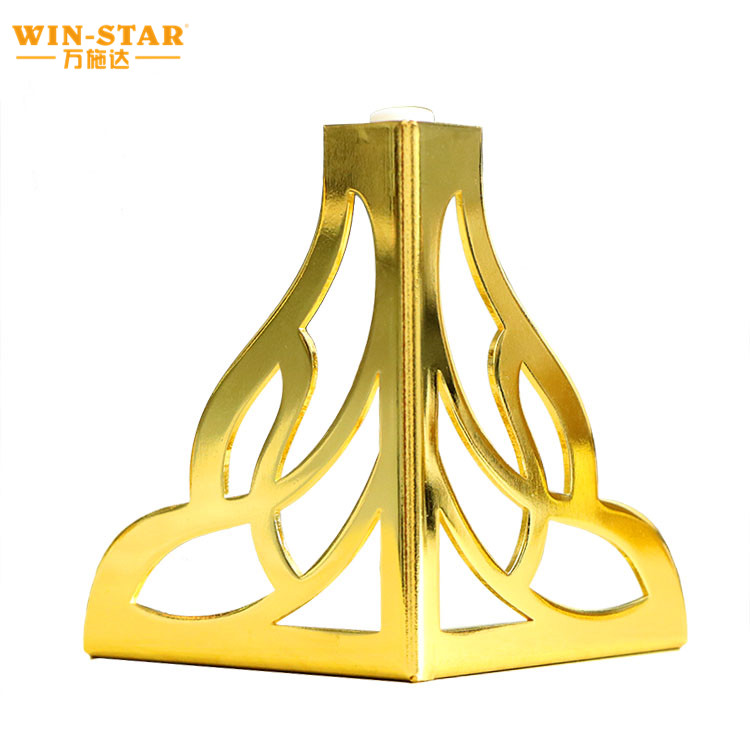
Structural integrity provides the foundation, but geometry defines the visual character. The shape of the leg dictates how the sofa visually interacts with your room. Furthermore, specific shapes offer unique structural advantages. You must select a profile complementing the design language of your heavy contemporary frames.
Table: Recommended Leg Geometries for Modern Sofa Styles
Design Style | Recommended Leg Profile | Key Structural Benefit |
|---|---|---|
Low-Profile & Minimalist | Cylindrical or straight square tubes | Maximum vertical load transfer; highly resistant to downward crushing forces. |
Mid-Century & Contemporary | Tapered triangle profiles | Wide mounting plate surface area; superior resistance to side-to-side lateral shifting. |
Retro-Modern & Industrial | Two-rod or three-rod hairpins | Visual lightness; flexible energy distribution (requires thick steel gauge). |
Ultra-modern Italian designs rely heavily on grounded, blocky aesthetics. They look best when kept close to the floor. Cylindrical or straight square tubes (typically 4 to 5 inches tall) maintain this grounded look perfectly. These shapes do not distract from the clean lines of the upholstery. Structurally, straight vertical columns offer incredible downward load capacities because the weight transfers straight down into the floor.
Mid-century modern pieces demand a tapered look. For these applications, triangle metal sofa legs provide a sleek, tapering aesthetic. They start wide at the top and narrow down toward the floor. This geometry is not just visually appealing. The wide top creates a massive mounting plate surface area. This drastically improves lateral stability against side-to-side shifting. When kids jump on the couch, triangle profiles prevent the frame from swaying.
Hairpin legs remain incredibly popular for retro-modern restorations. They look delicate and airy. However, they carry significant structural risks if poorly manufactured. Hairpin legs work well only if they feature a minimum of 3/8-inch cold-rolled steel thickness. Ideally, you should seek out 1/2-inch thickness. Thinner gauges will flex visibly under heavy upholstered frames, creating a bouncy, unstable seating experience.
Choosing the right finish ties your entire interior design scheme together. However, finish selection also involves practical considerations. You must protect your floors from severe damage. Bare metal acts like a chisel against soft wood. You must mitigate these risks before installation.
Your hardware finish should purposefully contrast or blend into your existing decor. Consider these standard styling combinations:
Luxury and Velvet: Bright brass or brushed gold sofa legs are currently standard for luxury, velvet-upholstered modern sofas. The warm tones of the metal offset the deep, rich hues of emerald or navy velvet.
Industrial and Leather: Matte black offers a muted, industrial contrast. It pairs flawlessly with distressed leather or natural linen. It absorbs light and keeps the visual focus on the fabric.
Minimalist and Monochromatic: Polished chrome suits stark, monochromatic contemporary designs. It reflects the surrounding room, making the sofa appear to float slightly above the floor.
Never install bare metal legs directly onto hard flooring. Bare metal will severely damage hardwood, laminate, and engineered floors within days. Evaluation criteria must include integrated floor protection.
Check whether the modern sofa legs feature integrated nylon, felt, or high-density rubber floor glides. Rubber provides the best grip, preventing the sofa from sliding when you lean against it. Nylon is excellent for carpets. Avoid hollow-bottom legs entirely. Hollow legs act like a cookie cutter. They will punch circular dents into your flooring under heavy weight. They also cannot accept protective plug inserts easily.
Buying the perfect leg is only halfway to a successful upgrade. You must securely attach them to the sofa frame. Many DIY projects fail at this exact stage. A weak attachment point guarantees a wobbly sofa, regardless of how strong the metal leg itself happens to be. You need to assess your sofa's internal wooden framework before making a purchase.
Turn your sofa upside down and examine the corners. Determine if the sofa frame utilizes pre-drilled T-nuts or if it requires a top-plate installation.
A T-nut system uses a threaded metal insert embedded in the wood. It requires legs equipped with hanger bolts (typically 5/16" or M8 sizes). You simply screw the new leg into the existing hole. Conversely, a top-plate design uses a flat metal square attached to the leg. You secure this plate directly into the wood using standard wood screws. You must buy legs matching your existing system unless you plan to retrofit the frame.
If you are transitioning from a hanger bolt to a top-plate design, proceed with extreme caution. Ensure the wooden frame corner blocks are wide enough to accept the new hardware. A standard metal mounting plate measures either 3x3 inches or 4x4 inches.
If your wooden corner block is too small, the screws will hang off the edge. Worse, driving thick screws too close to the edge of the wood will split the block entirely. Always pre-drill pilot holes before driving screws into hardwood frames. This simple step relieves internal pressure and prevents the wood from cracking.
When shopping for hardware, do not settle for vague product descriptions. Prioritize vendors supplying comprehensive specification sheets. You need exact details to guarantee a safe installation. Look for suppliers providing:
Exact height measurements down to the millimeter.
Certified weight limits for dynamic loads.
Precise top plate dimensions.
Appropriate gauge mounting screws included in the package.
Selecting the right size relies entirely on reverse-engineering your desired seat height and ensuring the mounting mechanism matches your sofa's frame. You cannot guess these dimensions. A successful upgrade requires careful measuring, strict attention to weight capacities, and an understanding of geometric structural benefits.
Your next steps are straightforward. Measure your current frame and cushion thickness to find your target leg height. Flip your sofa over to verify the structural integrity of your corner blocks and identify your mounting system. Finally, filter hardware suppliers based strictly on load-capacity guarantees and integrated floor protection. Following these steps guarantees your upgraded sofa remains stunning, comfortable, and structurally sound for years to come.
A: Yes, but increasing the height by more than 2 inches can alter the center of gravity, potentially causing instability or putting undue stress on the frame's corner blocks. Always ensure your wooden frame is sturdy enough to handle the increased leverage.
A: Metal legs typically offer higher tensile strength and require less bulk to achieve the same load capacity. This makes them ideal for the slim, minimalist profiles of modern sofas, providing maximum support without visual clutter.
A: You will need to use metal legs with flat mounting plates. Pre-drill pilot holes directly into the solid wood corner blocks of the sofa frame. This crucial step prevents the dense wood from splitting when driving in the provided wood screws.

| | Address: A1 No.277 HeFu Road,Fuwan Industry Area,Gaoming District,Foshan City,Guangdong,P.R.China |
| | 86-13928225189 |
| | Working Time: Mon–Sat: 08:30–18:00 |
| | E-mail: Lisa@fswinstar.com |


