


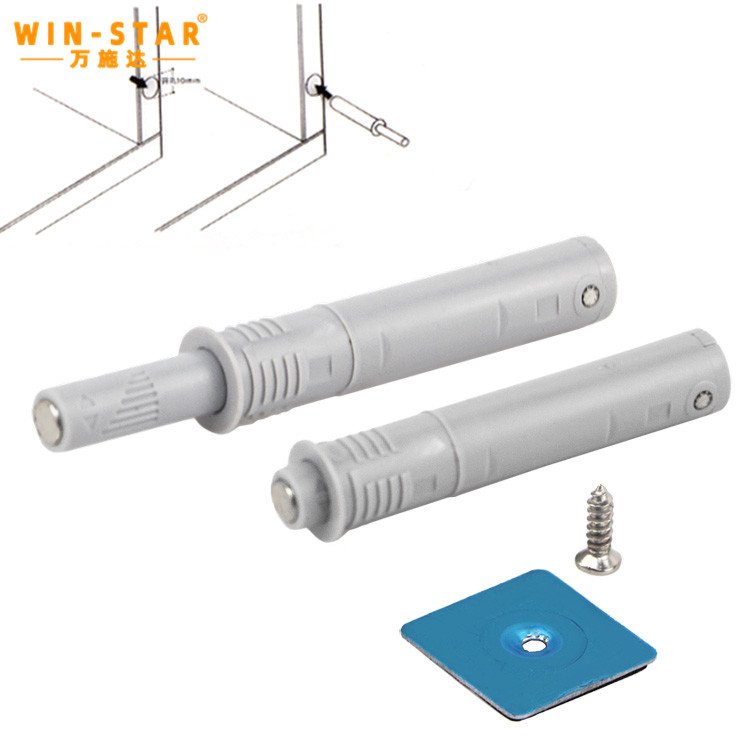


Push To Open System Cabinet Latch Overview
The plastic door bouncer is a specialized hardware component utilized across various cabinets, modern furniture pieces, and diverse cabinet door switch systems. While it may appear as a compact hardware accessory, its operational impact on furniture design and daily usability is substantial. Its most significant role is facilitating a completely minimalist aesthetic: after installation, the door is opened without a handle, meaning there is absolutely no need to use exterior hardware pulls or knobs. This hidden mechanism allows designers to maintain clean, uninterrupted lines on cabinetry facades, which is highly sought after in contemporary interior styling.
The operational experience is designed to be intuitive and highly responsive. Simply press the door panel, and the door opens with a smooth, controlled outward motion. The internal mechanism provides immediate tactile feedback, offering a slight, reassuring resistance before releasing the catch.
To secure the cabinet, simply push the panel back into place. Click again and the door closes. The sound is a muted, mechanical confirmation rather than a loud snap, ensuring that the acoustic environment of the room remains undisturbed. This reliable push-to-open and push-to-close cycle is engineered to endure thousands of repetitions without losing its precise tension.


The interior of the bouncer is mainly composed of a heavy-duty spring, a solid iron hook, a magnetic head (or plastic head depending on the specific configuration), and a durable plastic sleeve. By combining tough ABS plastic for the outer housing with rigid iron for the internal stress points, the structure remains incredibly stable. This material synergy guarantees that the latch will not become brittle or warp over time, even when subjected to the frequent opening and closing typical of busy residential kitchens or commercial storage spaces.
Panel Protection and Acoustic Control
Beyond simply opening and closing, this magnetic catcher actively protects furniture investments. The internal spring system acts as an effective buffer, absorbing the kinetic energy of a closing door. This prevents violent collisions between the door panel and the cabinet frame, drastically reducing friction and impact damage. Consequently, it minimizes operational noise and extends the structural lifespan of delicate wood veneers, painted surfaces, and internal hinges.
Versatile Application Scenarios
This push-to-open system integrates invisibly into a wide array of furniture types. It is particularly effective for modern kitchen cabinets, bedroom wardrobes, and bathroom vanity drawers where a sleek, handle-free exterior is desired. Because the hardware remains hidden inside the cabinet carcass, it adapts effortlessly to any custom home decor style, allowing the natural beauty of the cabinet materials to take center stage without visual interruption.


