







Engineering Precision: The Push-to-Open Mechanism
The retraction distance of the cabinet door is a critical concern for many consumers and furniture designers aiming for a flawless, flush finish. In general, this retraction distance is strictly maintained between 5-10 mm. This precise value is not set at will, but according to the spring design of the rebound and the structural design of the cabinet, after accurate calculation. Achieving this delicate balance ensures that the kinetic energy stored in the internal spring is sufficient to push the door ajar, allowing fingers to easily grip the edge, without causing the door to swing open violently.
At the same time, factors such as the overall dimensions, door material weight, and specific production process of the cabinet will also affect the retraction distance. For instance, a denser solid oak door requires a slightly different tension calibration compared to a lighter MDF panel. The internal mechanism utilizes a precision-engineered alloy spring that works in tandem with a reinforced magnetic catch. This combination guarantees a fluid push-to-open experience while providing a secure, steadfast hold when closed.
Our magnetic cabinet catches are available in various magnetic force and load-bearing ratings, ranging from standard suction for lightweight vanity drawers to heavy-duty magnetic options designed specifically for thick, oversized wardrobe doors. This ensures that regardless of the application, the doors remain firmly shut, completely eliminating the risk of accidental bouncing or sagging over time. The tactile feedback is instantaneous—a satisfying, responsive mechanical click that transforms ordinary storage units into premium, handleless furniture pieces that respond intuitively to a gentle touch.

Material Durability & Installation Versatility
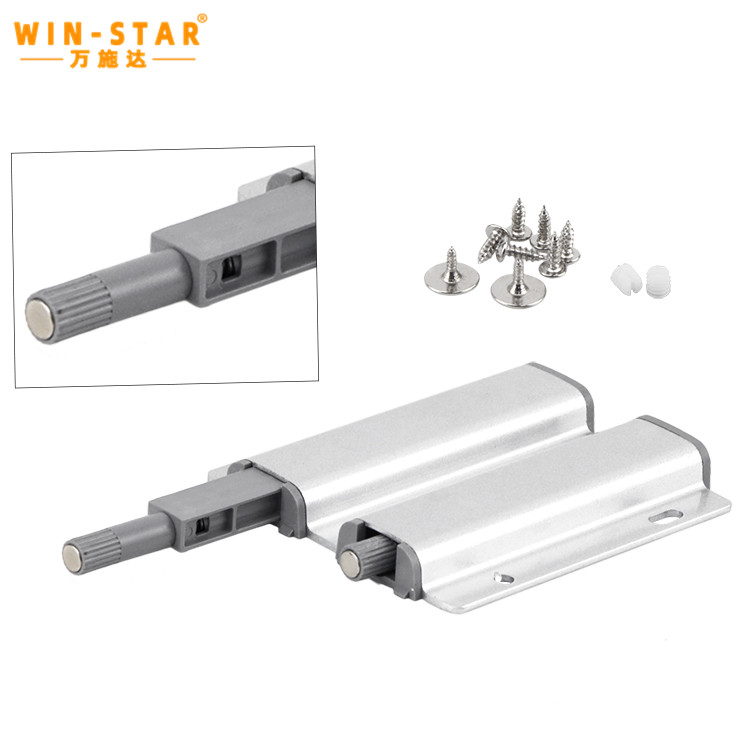
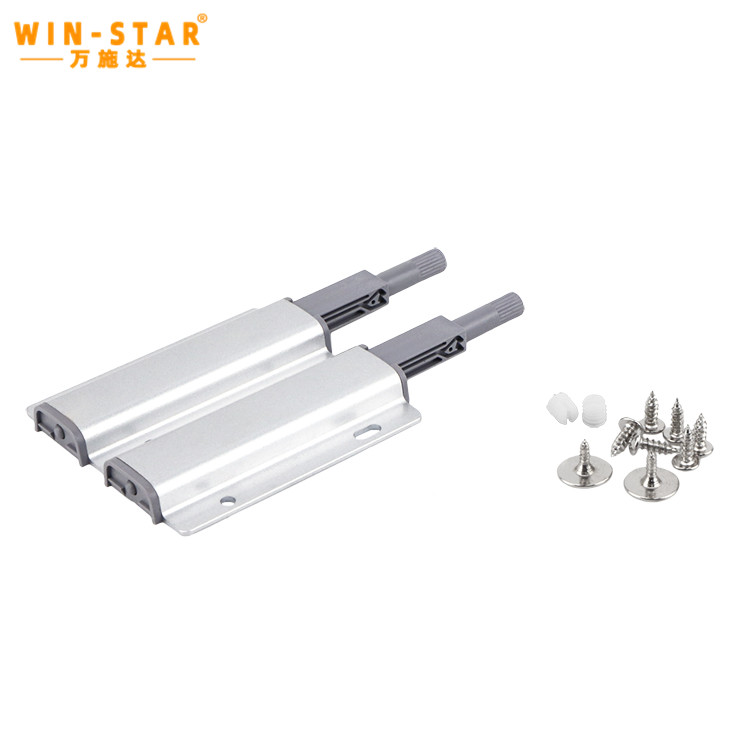
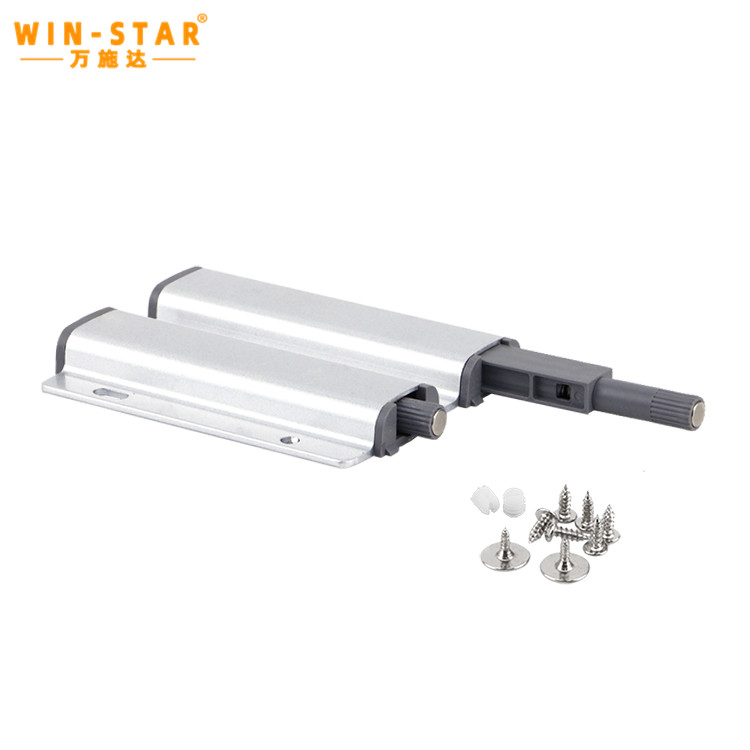
As a small and affordable part, the bouncer plays an important role in the cabinet's daily functionality and overall user experience. Its primary advantages are that it can be installed at will, is exceptionally easy to use, and has good elasticity and a reliable buffering effect. To meet diverse environmental demands and stringent project requirements, these latches are constructed from premium materials. Options include rust-resistant 304 stainless steel for maximum longevity, lightweight yet rigid aluminum alloy, and high-strength engineering plastics that resist impact and wear. This material diversity ensures long-lasting durability, even in moisture-prone areas like steamy kitchens or humid bathrooms.
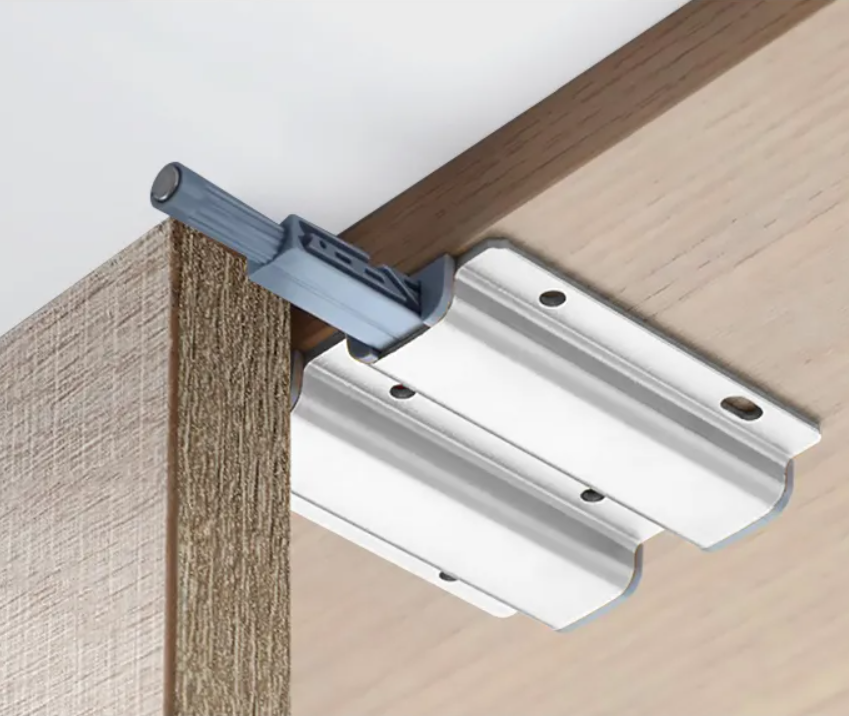
Installation is designed to be highly adaptable for different fabrication styles. The system supports multiple mounting configurations, including standard surface mounting for quick retrofits, discreet bore-in (embedded) installation for a completely hidden look, and offset strike designs. This flexibility accommodates various cabinet structures and construction habits. Furthermore, the adjustable magnetic head provides excellent stroke adjustment and fault tolerance. Installers can easily rotate the tip to compensate for varying door gaps and minor installation tolerances, significantly improving workflow efficiency during large-scale furniture assembly.
Aesthetically, the latches are available in a wide array of refined surface treatments, including matte black, crisp white, brushed nickel, and classic bronze, allowing them to blend effortlessly into any modern design scheme. However, it also has some minor disadvantages to consider; for instance, the cabinet dark slot is easy to hide dirt, and long-term use in dusty environments may affect the service life. Therefore, it is usually necessary to wipe the mechanism regularly to keep it clean and maintain its smooth, silent operation. A quick wipe with a microfiber cloth ensures the magnetic contact points remain free of debris, preserving the strong holding force.


